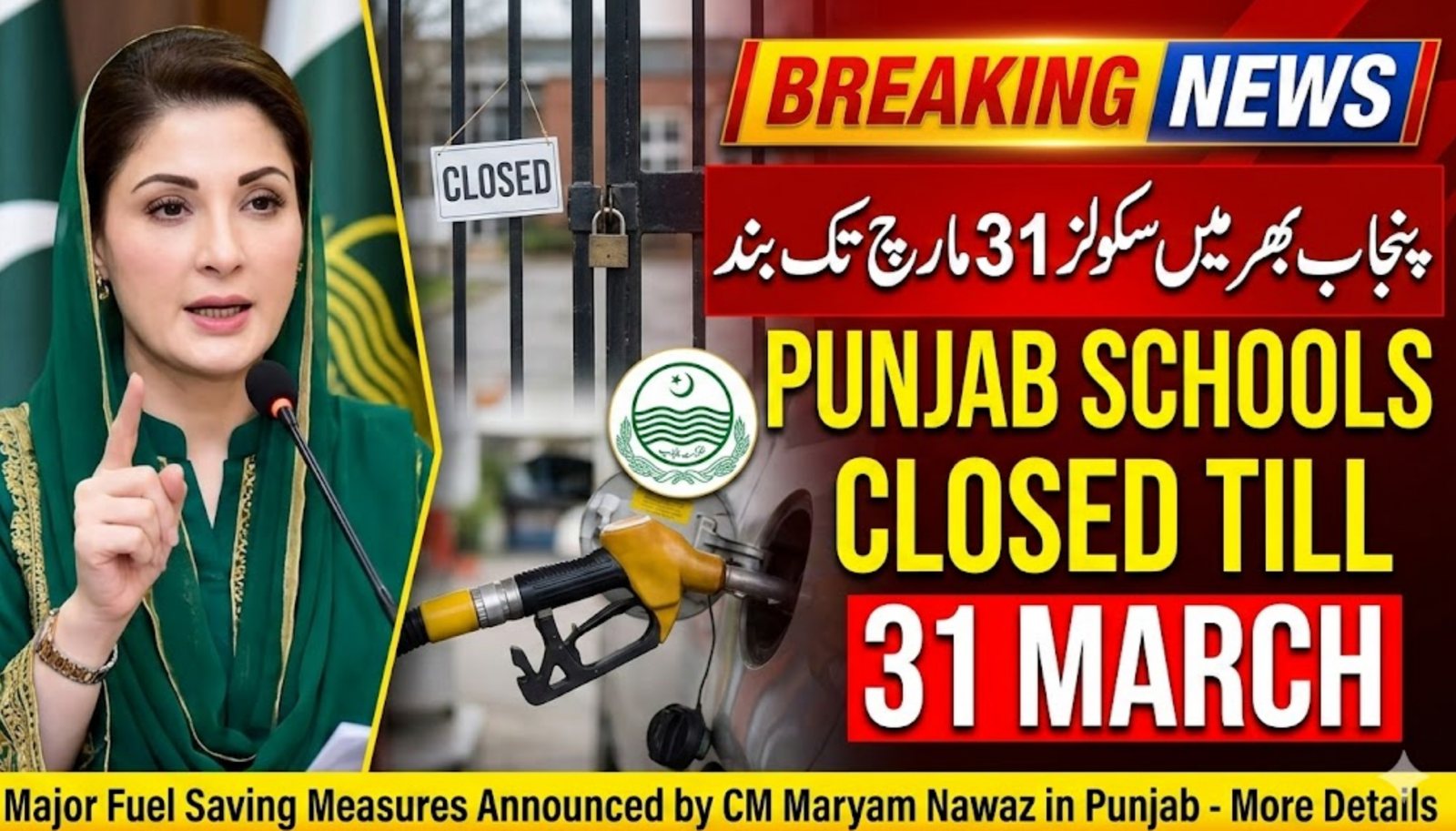
Punjab Chief Minister Maryam Nawaz Sharif has announced several urgent steps to deal with the growing petroleum crisis and economic pressure in the region. The decision comes after rising fuel concerns linked to the ongoing regional situation. The Punjab government aims to control fuel use, reduce unnecessary movement, and manage essential resources wisely. Under the new policy, fuel for provincial ministers has been stopped temporarily, and major reductions in fuel allowances for government officers have also been implemented.
The announcement was made in Lahore on 9 March, where the chief minister said the province must act responsibly during this difficult time. She stressed that these measures are temporary but necessary to protect the economy and ensure that fuel supplies remain available for essential services.
Read More: PM Ramzan Relief Package Payment Method
Table of Contents
Fuel Restrictions for Government Officials
One of the biggest decisions taken by Maryam Nawaz Sharif is the suspension of official fuel for provincial ministers until the petroleum situation improves. In addition, the government has reduced petrol and diesel allowances for government officers by 50 percent with immediate effect.
Another important step is the restriction on protocol vehicles. Previously, several vehicles used to accompany ministers and senior officials. Now, only one vehicle will be allowed for essential security purposes.
Officials believe this move will significantly reduce fuel consumption across government departments and set an example for responsible usage.
Read More: Eid Holidays Schedule Announced in Pakistan 2026
Work From Home Policy and Office Changes
The Punjab government has also introduced a Work From Home policy for government offices. Only essential staff members will be required to attend offices, while the remaining employees will perform duties remotely.
However, the government clarified that official work will not stop. Meetings and coordination will continue through online sessions and teleconferences.
Citizens will still receive public services through digital systems such as e-business platforms and the government initiative “Maryam Ki Dastak.”
Schools, Colleges and Universities Closed till 31 March
Educational institutions across Punjab will remain closed from 10 March to 31 March. This includes schools, colleges, and universities.
However, students will not lose their academic schedule. Authorities confirmed that exams will be held according to the original timetable, and institutions are encouraged to conduct online classes to continue learning during the closure period. Educational institutions have been encouraged to continue learning through online classes so that students do not face academic delays.
Read More: prmrp.nitb.gov.pk 9999 Relief Program
Monitoring Fuel and Transport Prices
To prevent misuse and hoarding of fuel, the Punjab government has ordered the formation of District Petroleum Monitoring Committees in every district.
These committees will monitor petrol supply and pricing closely. The Punjab Information Technology Board (PITB) has also been tasked with developing a Track and Trace System for petroleum products.
This system will help authorities track fuel distribution and identify irregularities quickly.
The monitoring team will include representatives from district administration, police, and other institutions to ensure transparency and effective control.
Key Measures Announced by Punjab Government
| Measure | Details |
| Fuel for Ministers | Completely suspended temporarily |
| Fuel Allowance for Officers | Reduced by 50% |
| Protocol Vehicles | Only one security vehicle allowed |
| Work From Home | Implemented in government offices |
| Schools & Universities | Closed from 10 March to 31 March |
| Online Classes | Allowed for educational institutions |
| Fuel Monitoring | District petroleum monitoring committees formed |
| Digital Services | E-business and Maryam Ki Dastak services continue |
Public Advisory from the Chief Minister
The chief minister has also requested citizens to cooperate during this challenging time. She advised people to avoid unnecessary outdoor events, reduce late-night shopping, and not store essential goods unnecessarily.
Authorities will keep a strict watch on transport fares to stop overcharging. Anyone found demanding unfair fares will face strict legal action.
She emphasized that strong nations face crises with patience, unity, and wisdom.
At the same time, Maryam Nawaz Sharif praised Shehbaz Sharif and Asim Munir for taking courageous decisions during a difficult national situation.
Final Thoughts
The Punjab government’s latest decisions highlight how serious the current petroleum and economic situation has become. By limiting fuel usage, promoting remote work, and monitoring supply chains, the administration hopes to maintain stability and avoid shortages.
While these steps may temporarily change daily routines for many people, officials believe they are necessary to ensure that essential services continue smoothly and resources are used responsibly.
Read More: pmrrp.nitb.gov.pk Registration
FAQs
1. Why did the Punjab government stop fuel for ministers?
The decision was taken to reduce fuel consumption during the ongoing petroleum crisis and economic pressure.
2. When will schools reopen in Punjab?
Schools, colleges, and universities are closed from 10 March to 31 March, but exams will continue as scheduled.
3. Will government offices remain closed?
No. Offices will continue working, but many employees will work from home.
4. What is the purpose of the petroleum monitoring committees?
They will monitor fuel supply, pricing, and prevent hoarding or illegal activities.
5. Are public services still available?
Yes. Citizens can access services through online platforms and Maryam Ki Dastak services.